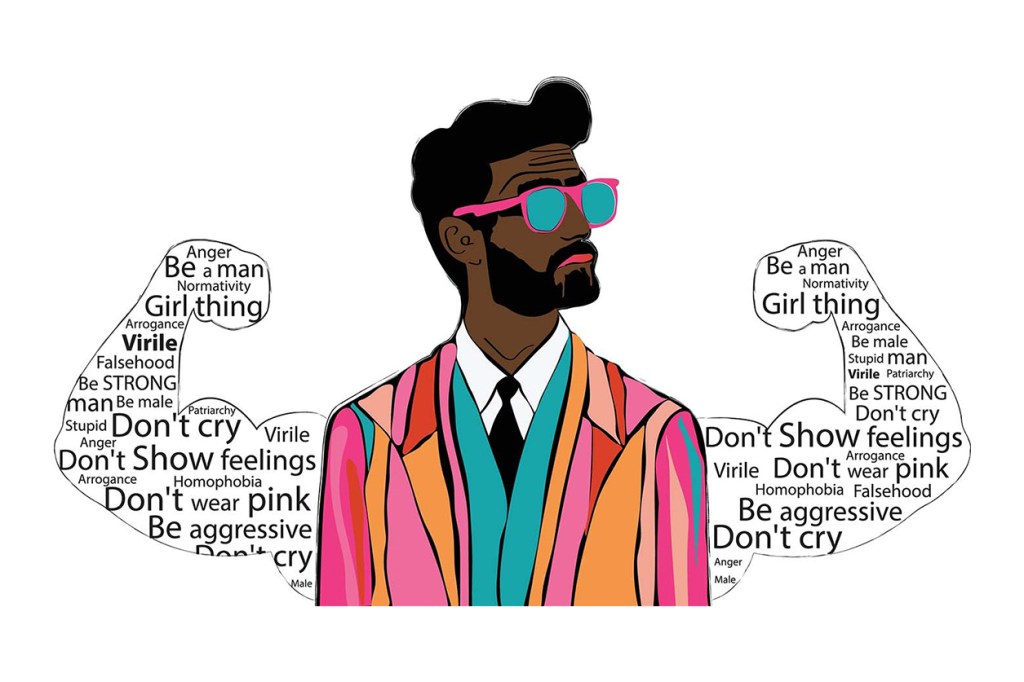
“In this culture we celebrate boys through the lexicon of violence. ‘You’re killing it,’ ‘you’re making a killing,’ ‘smash them,’ ‘blow them up,’ ‘you went into that game guns blazing,’ and I think it’s worth it to ask the question what happens to our men and boys when the only way they can valuate themselves is through the lexicon of death and destruction?
I think when they see themselves as only worthwhile when they are capable of destroying things, it’s inevitable that we arrive at a masculinity that is toxic”― Ocean Vuong
The Vietnamese poet, Ocean Vuong, has a way of slicing through the noise. His words settle in your gut and refuse to budge. When I heard him speak about this in a television interview, it’s like a key turning in a lock I didn’t fully realise was there. As a headteacher, I spend my days steeped in the brilliant, chaotic energy of young lives growing and learning, navigating friendships, successes, and stumbles. Language is my constant companion – the carefully chosen words in an assembly, the quick exchange in the walkway, the gentle redirection in a classroom. But beneath the surface, there’s a different language, one deeply embedded in our culture, a “lexicon of violence” that Vuong so sharply articulates.
This isn’t just background noise for me; it’s a frequency I know intimately, a chilling echo of experiences I carry as a survivor of male violence. It’s the sound of power described in terms of dominance, of achievement framed as annihilation of the ‘opponent,’ of strength equated with the capacity to harm. When success is painted with brushstrokes of destruction – “killing it,” “smashing it” – it feels terrifyingly close to the very real ways violence has manifested in my own life and in the lives of others. It underscores how a culture that normalises aggressive language can, intentionally or not, pave the way for environments where actual violence can take root or be subtly excused. The language we use to celebrate success can, in this twisted way, feel chillingly aligned with the language of control and harm.
This isn’t just about physical violence, of course. It’s about the everyday ways patriarchal structures define what is valued, often filtering it through a lens of aggression and competition. It dictates who gets heard, whose contributions are amplified, and what kind of behaviour is deemed “strong” or “effective.” For too long, this has felt like the air I breathe, shaping not just how I see the world, but how the world has sometimes seemed to see me, or expect me to be, in order to “succeed.”
And honestly, what a crushing weight to place on men and boys! If their inherent value is tied to their capacity for “death and destruction,” how limiting is that? How lonely? How does that leave room for empathy, for vulnerability, for connection – the very things that build meaningful lives and strong communities? It’s a script that forces them into a narrow, often harmful, definition of self.
But here’s where the headteacher in me pushes back, where hope insists on a different vocabulary. Because I see, every single day, examples of true strength, real success, that have nothing – absolutely nothing – to do with this violent lexicon. I think of colleagues, students, parents, who embody leadership and achievement through entirely different means.
Take someone I know – let’s call him… well, let’s just call him an example of what real success looks like. He’s a natural leader, yes, but he gains trust not by barking orders, but by listening. By being present. His team doesn’t follow him out of fear, but out of respect earned through genuine connection. He’s great at organisation and takes initiative, not to grab power, but because he has a vision for making things better, for creating systems that support others. He’s innovative, always exploring – building, not breaking. There’s an excellent pace and energy to his work, not a frantic, destructive force, but a vibrant, positive momentum that carries others along. And critically, he builds genuinely good relationships with everyone – students, staff, parents. It’s a network of trust and mutual support, not a hierarchy built on dominance.
This is success. This building, this connecting, this quiet strength rooted in competence and care. It’s the antithesis of “smashing it” or “killing it.” It’s about nurturing, developing, collaborating, and lifting others up. Why aren’t these the qualities that leap to mind when we talk about winning?
The habit runs deep, doesn’t it? It’s in the casual Friday chat about “killing it” at the gym, the proud boast about “crushing” a sales target, the slightly darker undertones when we talk about “beating the competition into the ground.” This language doesn’t just describe success; it shapes our understanding of it, casting every challenge as an enemy to be vanquished, every goal as a target to be obliterated. It makes collaboration feel like a weakness and empathy a distraction from the real business of “winning.”
But we have the power to choose different words, to paint a different picture. Instead of saying a student “aced that test” (sometimes linked to aggressive ideas of dominance), we could say they “mastered that concept,” “showed deep understanding,” or “reached a new level in their learning.” It shifts the focus from a one-time ‘win’ over the test itself to the ongoing process of growth.
In the professional world, instead of talking about “beating out” other candidates for a job or “crushing the competition” in the market, we can talk about “earning the opportunity through demonstrated skill,” “innovating to meet needs,” or “creating unique value.” It refocuses on competence, creativity, and contribution rather than simply overcoming rivals. When a project goes exceptionally well, instead of saying “we killed that presentation,” we could say “we built a strong case,” “we connected with the audience,” or “we brought our vision to life beautifully.”
Even in personal resilience, the language of violence is pervasive. We talk about “battling demons,” “fighting for survival,” or being “hardened” by difficult experiences. While these metaphors capture the intensity of struggle, they can also trap us in a perpetual state of conflict. What if we talked instead about “integrating our shadows,” “navigating challenges with courage,” or being “shaped by resilience”? It’s a subtle shift, but it moves from an endless war against parts of ourselves or our past to a process of acceptance, growth, and navigation.
It’s not about sanitising language or pretending that challenges aren’t difficult. It’s about recognising that we have a choice in how we frame these struggles and achievements. Do we want to perpetuate a narrative where value comes from conquering and destroying? Or do we want to cultivate one where value is found in building, connecting, understanding, and growing – both individually and collectively?
This reframing feels particularly vital in education. We are shaping the future architects of our society. If we can instil in them a language of success rooted in collaboration, empathy, and creation, perhaps we can begin to dismantle the toxic underpinnings of the old lexicon. It’s a conscious, daily practice, like tending a garden after a storm – clearing the debris of the old, harmful language to make space for new, more nourishing ways of speaking, thinking, and being. It’s about finding the words that truly celebrate the quiet victories of connection, the persistent strength of kindness, and the profound power of building a world where everyone can thrive, not just those deemed capable of “winning” through force.
Changing the language we live in feels like a monumental task, like trying to reroute a river. But it starts with conscious effort, a daily practice of noticing the words we use and challenging the narratives they support. In our schools, we have a moral imperative to cultivate a different understanding of strength – one that values empathy, resilience, and collaboration above competition and dominance. It means explicitly teaching children that their worth is inherent, not something to be earned through overpowering others. It means celebrating kindness as loudly as we celebrate goal scoring or top grades.
More broadly, we have to challenge this ingrained cultural script wherever we see it. It means choosing our words mindfully, calling out the violent lexicon when it diminishes true achievement, and championing a vision of success that is expansive enough to include nurturing, vulnerability, and the quiet power of building connections.
Ocean Vuong’s words are an invitation to build something new. To construct a language, and a world, where the measure of a person’s worth isn’t found in their capacity for destruction, but in their boundless potential for creation, connection, and compassion.
 agirlcalledlynsey
Leave a comment